
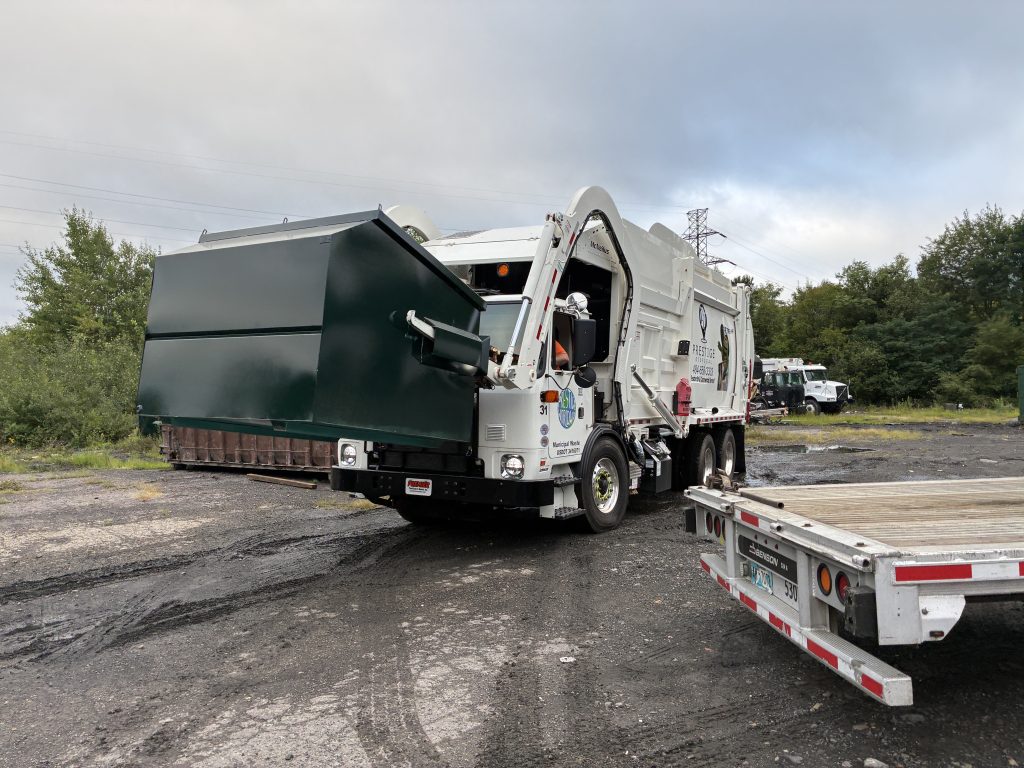
Selecting the proper container capacity directly dictates operational overhead, site safety, and exterior cleanliness. Many businesses throughout Northeast Pennsylvania either overpay for unutilized capacity or incur persistent overflow fees from undersized containers. Sizing a container accurately requires balancing daily volume, material density, and route collection frequency.
At Prestige Disposal, we deliver flat-rate, contract-free commercial dumpster services across our broad NEPA service areas, including Luzerne, Lackawanna, and Wyoming counties. Below is an operational breakdown of standard 2, 4, 6, and 8-cubic-yard frontload containers to help you select the exact container size required for your facility.
Need a comprehensive waste audit for your commercial facility?
Request an On-Site Commercial Waste Audit
Why Frontload Container Sizing Matters
Commercial waste billing depends on two primary metrics: container volume (measured in cubic yards) and service frequency (scheduled pickups per week). Sizing miscalculations typically produce two costly outcomes:
- The Undersized Container: Sizing down to chase an artificially low base rate leads to lid-height violations, scattered wind-blown debris, vector attraction, and recurring hauler overage penalties.
- The Oversized Container: Paying for unutilized airspace inflates monthly utility expenses with zero operational return.
The operational benchmark is maintaining 80% to 90% capacity by the morning of your scheduled service day, allowing a manageable buffer for routine volume surges without risking overflow penalties.
Standard Commercial Dumpster Sizes Comparison
Frontload containers are engineered to handle solid commercial waste, compactable cardboard, and routine facility refuse. Use this comparative matrix to evaluate baseline dimensions and capacities against your facility’s physical layout:
| Container Size | Dimensions (L × W × H) | Bag Capacity (30-Gal) | Average Weight Limit | Typical Applications |
|---|---|---|---|---|
| 2-Yard Dumpster | 3 ft × 6 ft × 3 ft | 12–15 bags | 400–500 lbs | Professional offices, boutiques, light retail (< 15 staff) |
| 4-Yard Dumpster | 4.5 ft × 6 ft × 4.5 ft | 24–30 bags | 800–1,000 lbs | Mid-size offices, medical clinics, small dining spots |
| 6-Yard Dumpster | 5.5 ft × 6 ft × 5 ft | 36–45 bags | 1,200–1,500 lbs | High-volume restaurants, multi-tenant retail plazas |
| 8-Yard Dumpster | 6.5 ft × 6 ft × 6 ft | 48–60 bags | 1,600–2,000 lbs | Distribution centers, grocery markets, apartment complexes |
Detailed Size Specifications & Operational Profiles
1. The 2-Yard Frontload Dumpster
The 2-yard container represents the smallest permanent commercial footprint available. Its low profile makes it ideal for commercial properties with narrow parking envelopes or constrained alleyway access in dense municipal areas like Wilkes-Barre and Scranton.
- Primary Waste Streams: Shredded paper, office packaging, lightweight breakroom refuse.
- Target Facilities: Legal practices, accounting offices, consulting agencies, and independent storefronts.
- Operational Benefit: A low sidewall allows personnel to deposit waste over the rim without overhead lifting, reducing strain.
2. The 4-Yard Frontload Dumpster
The 4-yard dumpster is the standard utility unit for commercial waste generation. It doubles the cubic volume of a 2-yard container while maintaining a similar physical ground footprint, achieving its capacity through increased container depth and height.
- Primary Waste Streams: Mixed light commercial waste, broken-down corrugated boxes, daily retail trash.
- Target Facilities: Medical clinics, veterinary centers, convenience retailers, and fast-casual dining locations.
- Operational Benefit: Provides sufficient volume buffer for weekend sales volume without demanding an expanded concrete pad.
3. The 6-Yard Frontload Dumpster
Engineered for high-volume commercial producers, the 6-yard container is built to handle substantial solid refuse. These units include sliding plastic side doors to allow staff to load dense trash bags easily without lifting them over the tall top rim.
- Primary Waste Streams: Organic food waste, dense retail packaging, back-of-house operational discard.
- Target Facilities: Full-service restaurants, retail strip plazas, light assembly plants, and auto maintenance shops.
- Operational Benefit: Side-access loading doors simplify handling for heavy commercial trash bags.
4. The 8-Yard Frontload Dumpster
The 8-yard container is the largest standard frontload container available before a facility must transition to an open-top roll-off or self-contained compactor. If your operational waste exceeds an 8-yard container serviced multiple times per week, evaluate our heavy-duty roll-off dumpster rentals or dedicated commercial/industrial roll-off hauling services.
- Primary Waste Streams: High-volume corrugated shipping cartons, warehouse pallet scrap, multi-family tenant trash.
- Target Facilities: Warehouses in Jenkins and Hanover Townships, logistics depots, supermarkets, and large apartment complexes.
- Operational Benefit: Delivers the lowest cost-per-cubic-yard ratio for businesses generating steady, large-scale waste.
Site Access & Enclosure Design Requirements
Selecting the right container size must be paired with proper enclosure and corral planning. Commercial frontload collection vehicles lift containers directly overhead, requiring clear physical site parameters:
- Overhead Clearance: Maintain at least 25 feet of unobstructed vertical clearance above the container, completely clear of utility wires, structural canopies, and tree branches.
- Approach Distance: Collection vehicles require a minimum 50-foot straight-line approach to lock the front forks into the container side pockets safely.
- Corral Gates: Gates must swing open a full 180 degrees and utilize functional cane bolts or drop pins to secure them open during collection, preventing wind-driven gate collisions with the vehicle.
The Prestige Disposal Commercial Difference
National waste corporations frequently leverage low introductory rates to lock commercial facilities into 36- to 60-month contracts featuring aggressive escalation clauses, variable fuel surcharges, and punitive cancellation terms. Prestige Disposal operates on an entirely different model:
- Transparent Flat-Rate Invoicing: Review our straightforward pricing structure. The rate we quote is the rate on your invoice—zero arbitrary environmental recovery fees or fluctuating fuel surcharges.
- Month-to-Month Agreements: We retain commercial clients through operational performance, not binding legal threats or liquidated damages clauses.
- Fleet Reliability: Dispatched from our central Exeter facility, our trucks are maintained to strict mechanical standards, eliminating fluid and hydraulic leaks on your asphalt or concrete parking surfaces.
- Complete Waste Capabilities: In addition to commercial frontload containers, we provide residential trash collection with free monthly bulk drop-off, municipal waste solutions, and temporary job-site roll-offs.
For more answers regarding collection schedules, accepted materials, and service guidelines, review our comprehensive frequently asked questions.
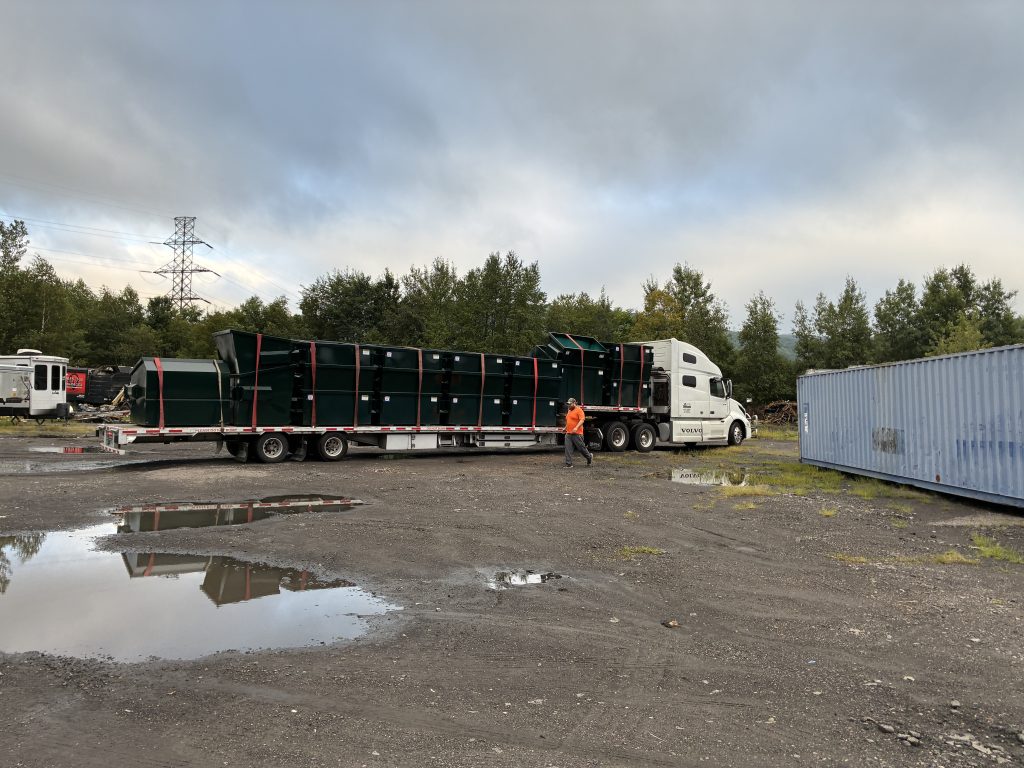
Request a Custom Commercial Waste Quote
Unsure whether a 4-yard or 6-yard container matches your facility’s weekly volume? Contact our operations dispatch to evaluate your waste output and schedule your container delivery.
Ready to make the switch? Call 484-658-3333 (Press Extension 3 for Katie) or fill out our contact form to get a competitive, flat-rate quote for your commercial facility today.
